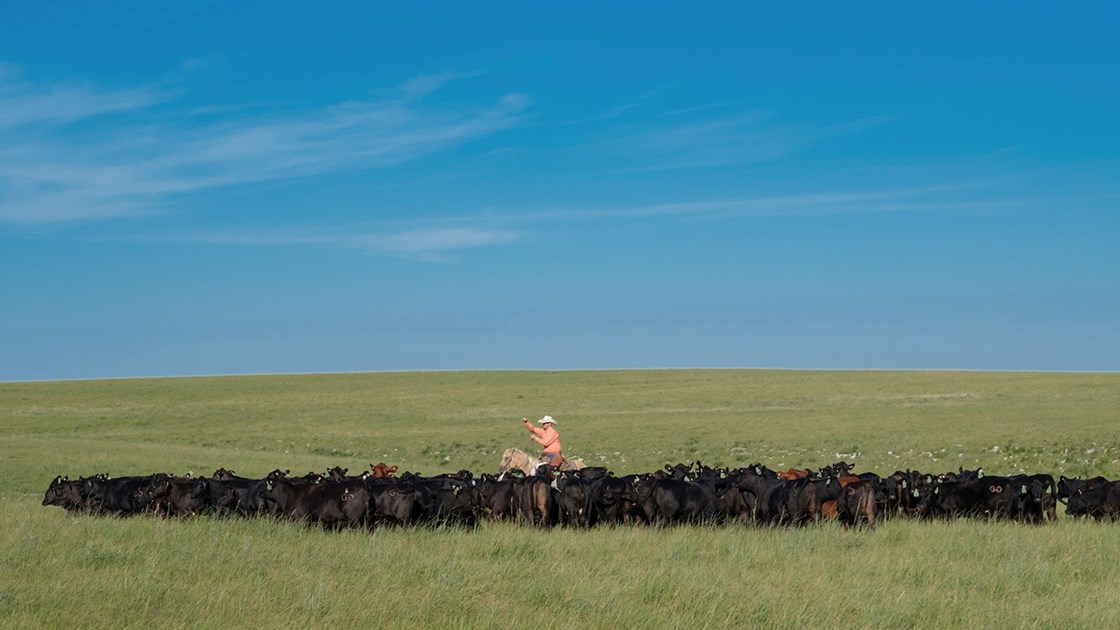
How Kansas Ranchers Care for Cattle on the Pasture
A behind-the-scenes look at what it really takes to raise healthy beef cattle in the Flint Hills, from before sunrise to the dinner table.
The sun has not crept over the Kansas horizon yet, but Arturo is already preparing for his day. His coffee is ready, his horses need saddling, and somewhere inside the house, his two young sons are still sleeping. This is the reality of raising cattle in Kansas: early mornings, long rides through pastures, and a commitment to caring for every single animal. Arturo is a cattle nutritionist and custom grazer with a PhD in Animal Science from Kansas State University. He manages cattle across the Flint Hills, and his mornings follow a careful, consistent routine. This is what responsible cattle ranching actually looks like.

What a Day on the Pasture Looks Like
"When I have cattle grazing on pastures in the Flint Hills my day usually starts around 4:30am to 5:30am," Arturo explains. "I'll grab some breakfast, try not to wake up my kids, fill up my coffee and get my horses ready for a morning of riding pastures and checking cattle."Once he arrives at the pasture, the real work begins. "When I get to a set of pasture, I unload my horse and start riding through the pastures checking cattle health and getting an accurate head count to make sure every calf is accounted for."
During spring and summer in Kansas, ranchers watch carefully for specific health issues. "We're primarily checking for pink eye and foot rot, which is like athlete's foot but in cattle," Arturo says. "You can't prevent these diseases because they can happen naturally. Cattle can get pink eye from just scratching an eye on the grass as they're walking or grazing. They can get foot rot from standing in ponds to cool themselves on a hot day. It has nothing to do with management or hygiene. Some cattle will just get sick. Fortunately, most won't."
When Cattle Get Sick, Ranchers Respond
On one particular morning, Arturo's careful observation paid off. "We were on our second pasture of checking a group of calves when we noticed a calf in the distance that had a slight limp," he recalls. "When a calf has foot rot, they might have a slight limp or be off by themselves because they can't keep up with the rest of the herd. They're in pain and they need medicine to heal."
Every treatment decision is made with the animal's wellbeing as the priority. "We needed to catch the calf in order to give it the medicine that would treat its foot. We were a few miles away from the nearest holding pen, so moving that calf to a pen to treat it would have caused unnecessary pain and stress by making it walk. The most ethical and low-stress way to treat this calf would be to rope it while it was still with the other calves in the pasture."
With help from another rancher, Arturo treated the calf efficiently. "Once we have the calf roped and secured, we move as quickly as we can to minimize any stress that will be placed on the animal."


The Truth About Antibiotics in Beef
Antibiotic use in cattle follows strict protocols governed by the FDA. Arturo marks treated cattle with washable chalk so he can identify and monitor them through recovery. Every medication used in livestock must meet federal safety standards, including mandatory withdrawal periods before animals can enter the food supply.
"When livestock are sick, you do whatever you can to make them feel better," Arturo explains. "You want to make sure that calf is as comfortable as possible and will recover to a normal state and do so as quickly as possible. I only use antibiotics when an animal is sick. This particular calf received an antibiotic labeled for cattle by the FDA."
"I, like all ranchers, follow the guidelines set by the FDA," Arturo continues. "The FDA has a mandatory withdrawal period that states no residue can be left within any animal when it is consumed. Before a medicine can be cleared for use in food animals, it must undergo rigorous testing for withdrawal periods. Due to the age of the calf and the antibiotic used, there will be zero residue in the meat when the animal is consumed."
Record keeping is another critical part of responsible antibiotic use. "I keep incredibly detailed records of every medication I give to my cattle," Arturo notes. "I enter the calf's ear tag number, the date I gave the shot, the antibiotic used, and the reason why I used that antibiotic. This way, I have accurate records and can check on that calf later in the week to see how it is doing."

Why Ranchers Take Animal Care So Personally
For Arturo and his family, this work is deeply personal. "As livestock producers, we take a lot of pride in how we treat animals and produce a safe meal for families like mine," he says. "We'll never let an unsafe product enter the food chain. It's just not the right thing to do. We eat the same food, so I'm not going to put any food in front of my children that will be harmful to them." The calf Arturo treated that morning recovered completely. After finishing his rounds through multiple pastures, he headed home to his family. His three-year-old son was waiting eagerly to ride the horse his dad had been on all morning. "After my oldest son gets his chance to ride the horse I rode that day, we'll sit down and have lunch together as a family," Arturo shares. The connection between his work and his family runs deep. "Caring for an animal that will provide nourishment not only to your child but to others as well is an amazing experience. It's a peaceful environment that I get to work in. I get to see the sun rise and set in the Flint Hills and do it horseback. When you're riding your horse through these beautiful pastures it feels like you're one with nature and you're just kind of sneaking through it."What This Means for Your Table
When you choose beef, you are choosing a protein raised by ranchers who take animal health seriously. You are supporting families who wake up before dawn, ride miles through pastures, and treat sick animals promptly and responsibly using FDA-approved medications with mandatory withdrawal periods.- And you are getting food from ranchers who eat the exact same beef they raise, because their children's health matters just as much as yours. -
Frequently Asked Questions:
How do ranchers care for cattle on pasture?
Ranchers ride pastures daily, usually starting before sunrise, to check every animal for signs of illness or injury. They track head counts to ensure all cattle are accounted for, monitor for common seasonal health issues like pink eye and foot rot, and respond quickly when an animal needs treatment. Care on pasture is hands-on, daily, and deeply personal.
What health issues do cattle commonly get on pasture?
During spring and summer, two of the most common cattle health issues on pasture are pink eye and foot rot. Pink eye can occur when a cow scratches its eye on grass while grazing. Foot rot can develop when cattle stand in ponds to cool off on hot days. Neither is a result of poor management. Most cattle stay healthy, but prompt treatment is essential for those that do get sick.
Are antibiotics used safely in beef cattle?
Yes. Antibiotics are only used when an animal is sick and diagnosed as needing treatment. All medications used in livestock must be FDA-approved and carry mandatory withdrawal periods, meaning no antibiotic residue can remain in the animal before it enters the food supply. Ranchers keep detailed records of every treatment including the animal's ear tag number, date, medication used, and reason for treatment.
What is a withdrawal period for antibiotics in cattle?
A withdrawal period is the mandatory amount of time that must pass after an antibiotic is administered before the animal can enter the food supply. The FDA requires rigorous testing to establish these withdrawal periods, ensuring that no drug residue remains in the meat when it is consumed. Ranchers are required to follow these periods by law.
What is Beef Quality Assurance (BQA) training?
Beef Quality Assurance (BQA) is a voluntary certification program that trains beef producers in best practices for animal care, antibiotic stewardship, and food safety. Over 10,000 Kansas beef producers have completed BQA training, making it one of the most widely adopted quality programs in the beef industry.
Do ranchers eat the same beef they raise?
Yes. Ranchers and their families eat the same beef they produce. This is one of the strongest indicators of the care and safety standards applied throughout the production process. As Arturo, a Kansas cattle rancher and nutritionist, puts it: "I'm not going to put any food in front of my children that will be harmful to them."
What does low-stress cattle handling mean on pasture?
Low-stress cattle handling means working around cattle in a calm, deliberate way that minimizes fear and discomfort. On pasture, this includes moving slowly, avoiding sudden loud noises, and treating sick animals in the least disruptive way possible. When Arturo found a calf with foot rot miles from a holding pen, he chose to rope and treat the calf on the spot rather than force it to walk in pain to a facility.