Stronger with Nutrition

5 Common Mistakes that Stall Muscle Gain
Training hard but still not getting stronger? Here's what your missing. If you’re putting in the work on the field or in the gym but not seeing results, it’s likely a fueling issue, not a training one.Hear from Sports Performance Dietitian at Sporting Kansas City, Hannah Boyl, MS, RD, CSSD, LD
1. Not Eating Enough
If total calories are too low, your body can’t build no matter how hard you train. Each portion of your plate plays a key role in optimizing performance. For most athletes, starting with a Moderate Day Athlete Plate provides a solid foundation; however, it is important to adjust your intake based on your training! Use the Hard Day Athlete Plate for days when sessions are longer and more difficult, the day before a game, and game day. Low energy availability has been shown to limit muscle growth, recovery, and performance with long-term effects on health.1

Signs of Low Energy Availability
- Always tired, even on light training days
- Injuries that stick around longer than expected
- Frequent illness and having to miss training
- Feeling a lack of explosiveness or overall strength

2. Skipping
Carbohydrates
Shifting from total calories to carbohydrates… Did you notice that the changes in the Athlete Plates focused on altering serving sizes of carbohydrates based on intensity? Carbohydrate needs increase with longer duration, higher intensity, or multiple training sessions per day.
Low energy late in games or training sessions is often a carb issue. Carbohydrates are the primary fuel for high-intensity exercise and support both physical and mental performance.
Common signs of low carbohydrate intake include:
- Heavy legs during training or games
- Runs are slower than usual
- Feeling like you “hit a wall” before the end of the game
- Trouble repeating sprints and fewer sprints all together
- Poor decision-making in the later minutes
- Athletes who under-fuel carbs often struggle to train and recover effectively.4
3. Not Hitting Your Protein Target
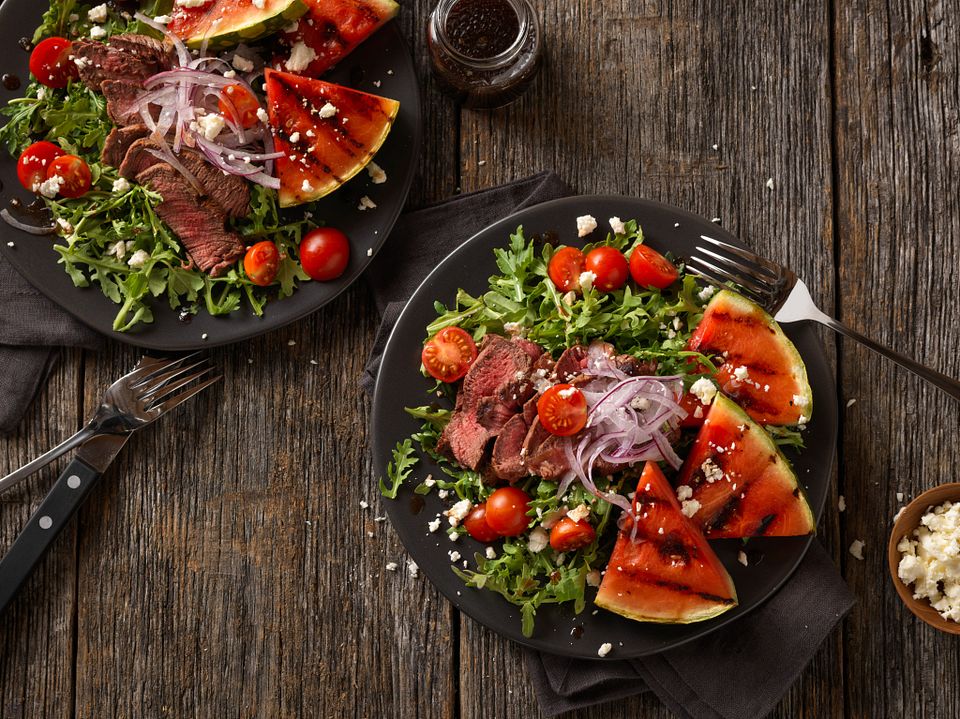
Protein provides the building blocks for muscle repair and growth. When you look at the Athlete Plates above, one thing stays consistent throughout, protein. Anchor meals with high-quality protein, like beef, which delivers ~25 g protein in a 3-oz cooked serving. Beef is considered a complete protein. So, if components of protein are the building blocks of muscle, beef provides a fully stocked toolbox ready to provide your muscles with the substance it needs to grow and recover. An especially important building block (amino acid) is leucine, which is responsible for kickstarting the muscle building process. For an optimal response, you need about 2-3 grams of leucine per meal. A 3-oz serving of cooked beef provides approximately 2.25 grams of leucine, a great way to get the muscle building party started.2,3

Vivamus eget eros posuere, efficitur turpis et, molestie magna. Vestibulum id nunc purus. Nulla facilisi. Donec libero ipsum, semper at finibus sit amet, consectetur a sapien. Sed placerat risus quis arcu volutpat faucibus. Nulla mattis neque sed dui pulvinar, sed feugiat eros varius. Aliquam tincidunt ultrices dignissim.
4. Skipping the Small Stuff (Micronutrients)
Vitamins and minerals matter. Nutrients like iron, zinc, magnesium, and B vitamins support energy production, oxygen delivery, and recovery.5 The best way to get in all those micronutrients is to eat a variety of foods, especially different colors of fruits and vegetables. Sometimes your body does need an extra boost and we have to get these nutrients from supplements. Working with your primary care doctor and dietitian can help you determine if extra supplementation is necessary.
“Beef is a nutrient powerhouse, delivering 10 essential nutrients, including high-quality protein, in about 170 calories per 3-oz cooked serving.6”
5. Falling Low (Or High) On Fats
Healthy fats support hormones and overall health, but too much can crowd out the carbs and protein needed for performance. Use fats to round out meals, not replace key fuel sources. You’ll notice that when we build a plate, we focus on 3 categories: protein, starch, and color (fruits and vegetables). Fat doesn’t really have a “section” of the plate, but it is still important to include as a condiment (nut butters), in cooking (olive oil), and/or extra flavor (avocado).
Easy ways to add healthy fats:
- Sprinkle nuts or seeds on oatmeal
- Pair fruit or veggies with peanut butter or sunflower seed butter
- Add avocado to wraps or sandwiches

Beef. The Protein That Powers You.
Muscle gain isn’t about one food. It’s about building balanced meals that work together. Beef can be a strong anchor when paired with carbs, color, and consistency to support performance, recovery, and growth. For more athlete-focused resources, register for the Sports Nutrition Game Plan.Sources
- Mountjoy M, Sundgot-Borgen J, Burke L, et al. IOC consensus statement on relative energy deficiency in sport (RED-S): 2018 update. Br J Sports Med. 2018;52(11):687-697. doi:10.1136/bjsports-2018-099193
- Philips SM, Van Loon LJC. Dietary protein for athletes: from requirements to optimum adaptation. J Sports Sci. 2011;29(suppl 1):S29-S38. doi:10.1080/02640414.2011.619204
- Moore DR, Robinson MJ, Fry JL, et al. Ingested protein dose response of muscle and albumin protein synthesis after resistance exercise in young men. Am J Clin Nutr. 2009;89(1):161-168. doi:10.3945/ajcn.2008.26401
- Thomas DT, Erdman KA, Burke LM. Position of the Academy of Nutrition and Dietetics, Dietitians of Canada, and the American College of Sports Medicine: Nutrition and athletic performance. Med Sci Sports Exerc. 2016;48(3):543-568. doi:10.1249/MSS.0000000000000852
- Maughan RD, Burke LM, Dvorak J, et al. IOC consensus statement: dietary supplements and the high-performance athlete. Int J Sport Nutr Exerc Metab. 2018;28(2);104-125. doi:10.1123/ijsnem.2018-0020
- U.S. Department of Agriculture, Agricultural Research Service. FoodData Central. Beef, composite, cooked, NDB#13364. Accessed 2019. https://fdc.nal.usda.gov/fdc-app.html#/food-details/170208/nutrients