

MEATING Your Needs
Kansas City Chiefs Sports Dietitian Leslie Bonci shares how beef's complete protein, essential amino acids and key minerals support athletic performance and recovery at every level.By Leslie Bonci, MPH, RDN, CSSD, LDN, FAND | Sports Dietitian, Kansas City Chiefs

Beef. A Tasty and Powerful Workout Recovery Food.
As a dietitian working with the Kansas City Chiefs, my goal is to help players strategize, optimize, and realize their potential through the foods they choose. Whether you are a casual athlete or a professional, eating well can boost physiology, physique, and performance when driven by practical and enjoyable food choices.
Why Beef is an Excellent Workout Recovery Food
If you want to be strong, have endurance, keep your muscles healthy, and support your immune system, protein is key. Beef contains all the important building blocks (amino acids) your body needs and is considered a high-quality complete protein. Being an athlete is tough on your body physically and mentally. Eating right helps your body recover after tough workouts. To recover well, you need to eat enough protein to rebuild what is broken down during exercise. This means distributing enough protein throughout the day, not just in one big meal. Protein works even better when paired with carbohydrates. Whether you are having a burger on a bun, pasta with meat sauce, or steak and veggie fajitas, these meals deliver both flavor and nutrient amplification.
"To recover well, you need to eat enough protein to rebuild what's broken down during exercise. Beef is an excellent choice." - Leslie Bonci, Sports Dietitian, Kansas City Chiefs
How Much Beef Do Athletes Need?
Beef is packed with nutrients, so you do not need a huge amount to get the benefits. A 3-ounce cooked serving of beef delivers 25 grams of protein and 2.25 grams of leucine, an important amino acid that helps keep muscles strong. After a challenging practice or workout when appetite may be reduced, beef's nutrient density in a smaller portion is a real advantage. Eating protein before lifting weights can support muscle growth, while post-practice nutrition helps with recovery. In football and other demanding sports, the right food is crucial for keeping athletes energized and strong throughout a season. Beef is great on its own but truly shines as part of a team when combined with grains, carbohydrates, fruits, and vegetables.

Vitamins and Minerals in Beef That Support Athletic Performance
Beef provides a bonus round of nutrients that support both body and mind. Iron, zinc, and selenium are minerals that help your body perform well. B vitamins help your body use nutrients properly. Beef also contains choline, which supports body and brain function, and phosphorus, which keeps bones strong.
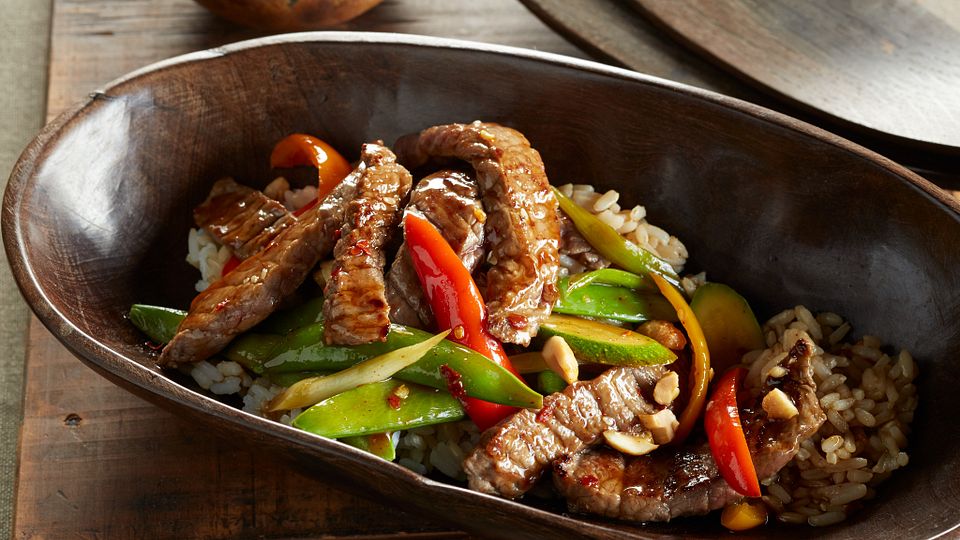
Tasty Recovery Meals


4 Ways Beef Supports Athletic Performance
Physiology
Beef fosters muscle and bone health while fortifying the immune system for proactive protection.
Physique
Beef aids muscle preservation and growth. Protein helps you feel full, an asset for optimizing body composition without sacrificing muscle. Its rich flavor, hearty texture, and satisfying chew prevent overindulgence. Beef can be combined with fiber-packed foods like beans, vegetables, and whole grains in dishes like stir-fries or salads. Incorporating fluids in stews or chilis takes up more stomach space, curbing hunger between meals and supporting body composition goals.
Performance
Including beef in your fuel plan equips athletes for workouts, practices, and games. It facilitates post-activity recovery, ensuring consistent performance across a full season.
Practicality
Beef is a familiar, versatile, and easily prepared option. Its widespread availability makes it a dependable choice that pairs well with a variety of foods, making it a great partner in creating balanced meals on any schedule.
Your meals should be based on what you like, what you can afford, and what you know how to cook. Beef brings value to physiology, physique, performance, and practicality and is on the Kansas City Chiefs' training table to help players choose foods that aid them in achieving their goals.
Beef Brings the Value You Need to Performance and Recovery
Remember, your meals should be based on what you like, what you can afford, and what you know how to cook.
Beef brings value to physiology, physique, performance, and practicality in numerous ways. Beef stands as a nutrition powerhouse at any meal and is on the Chiefs’ training table to help our players choose foods that aid them in strategizing, optimizing, and realizing their goals.
US Department of Agriculture, Agricultural Research Service, Nutrient Data Laboratory. USDA National Nutrient Database for Standard Reference, Legacy. Version Current: April 2018. NDB#13364. Internet: https://ndb.nal.usda.gov/ndb/ at https://fdc.nal.usda.gov/fdc-app.html#/food-details/170208/nutrients