
FCS & ProStart Teachers
Check out our FCS and ProStart resources on beef nutrition, selection and preparation.

Beef Certificate Program
The Kansas Beef Council (KBC) and the Kansas Corn Commission will reimburse Kansas high school and middle school FCS foods classes and ProStart programs for the purchase of beef used in classes and teaching labs. Your school is eligible for reimbursement based upon the number of students enrolled in FCS foods classes and the school classification for ProStart programs. Funds will be allocated on a first-come-first-serve basis. Funds are only available in Kansas schools.
FCS & ProStart Teacher Resources

Do You Know Your Moo? - Breakout Box Curriculum
- Great introduction to any beef unit.
- This breakout is designed to provide students basic knowledge of the beef industry. Students will learn about the common breeds of cattle, the beef life cycle, products made from beef, beef cuts, and facts about grain- and grass-finished beef.
- No physical box needed! The lesson can be played online.

Raw Truth About Beef
The Texas Beef Council’s Raw Truth About Beef interactive learning platform allows high school students to get a behind-the-scenes look at the beef industry and explore the beef production process from pasture to plate. Using engaging videos, the program follows an executive chef and registered dietitian nutritionist on a hands-on tours through the beef life cycle. To learn how cattle are raised, they visit a purebred ranch, a cow/calf ranch, and tour a feedyard. Stops at a processing facility, a distributor, a retail store, and a restaurant explore how beef becomes a safe, nutrient-dense protein source.
Teachers can walk through the curriculum and gain continuing education hours approved by the American Culinary Federation by clicking here.
Contact Abby if you have questions about using the Raw Truth About Beef curriculum in your classroom.

Connect: Beef Production & Family and Consumer Sciences
Lesson Plan – This 2-3 day curriculum is a great intro to beef cooking labs! Students will learn about beef nutrition and beef’s role in a sustainable and healthy diet, and they will connect virtually with farmers and ranchers across the U.S. to learn how beef gets from pasture to plate. Many cross-curricular connections can be made using this curriculum and teachers are encouraged to adapt this activity to meet their lesson’s objectives and learning outcomes.
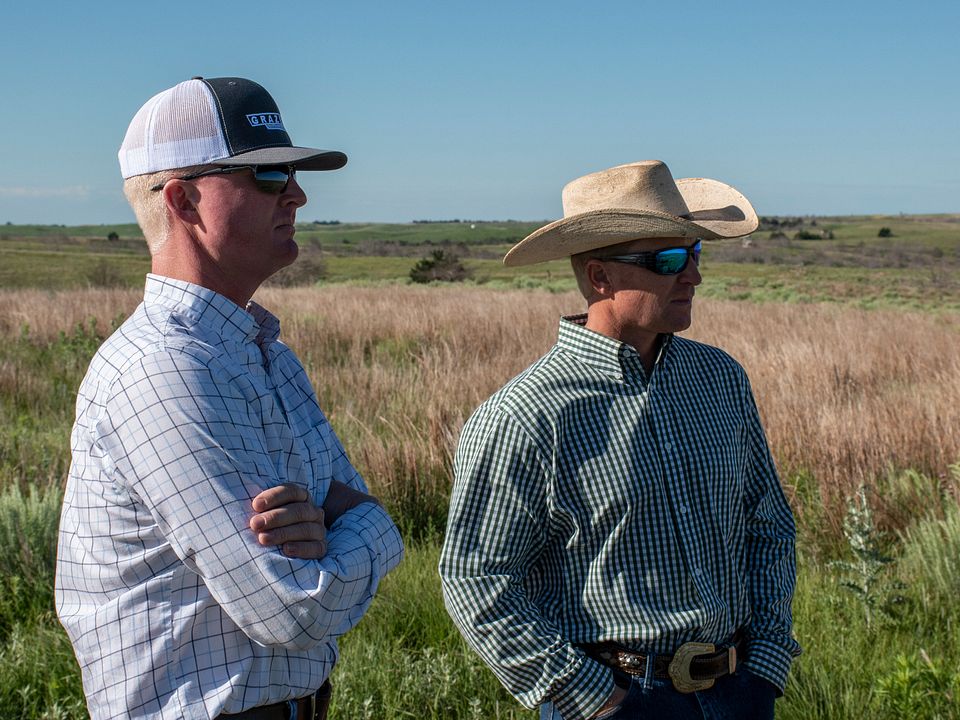
True Beef Pasture to Plate
Lesson Plan - This guide contains 8 lessons for the High School Culinary Arts or Family and Consumer Sciences program. However, STEM connections have been included for all lessons making it easy for teachers to make connections across the curriculum.

Beef: Processing to Plate, 3-Part Virtual Learning Series
This three-part virtual learning series helps students understand how beef moves from processing to preparation. Through guided virtual experiences, students will learn about the steps involved in processing beef, basic meat science concepts and how beef is prepared in the kitchen.
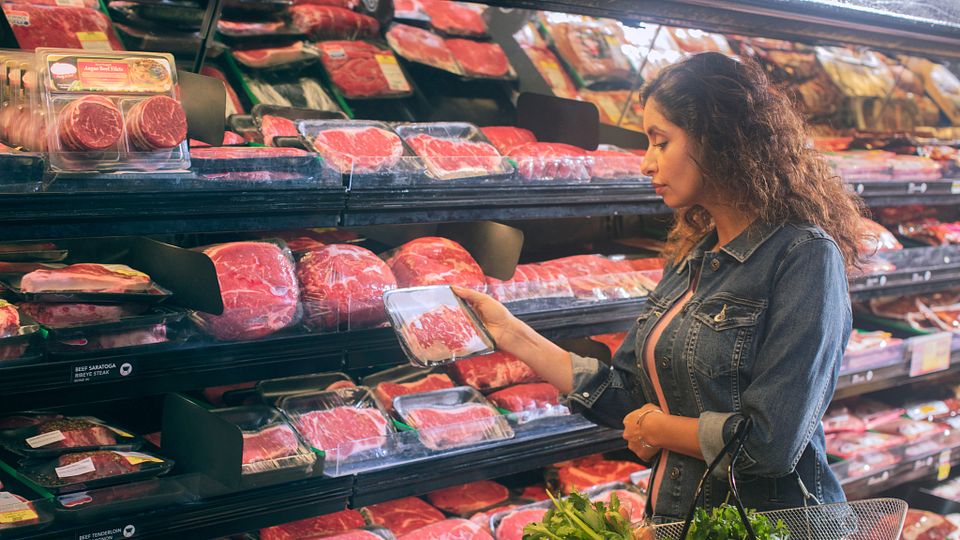
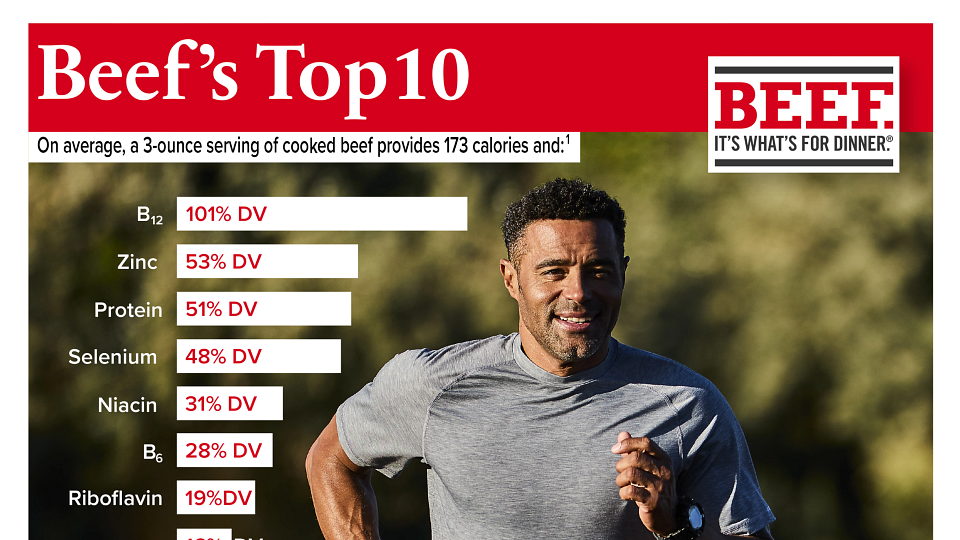
Infographics for ProStart Teachers
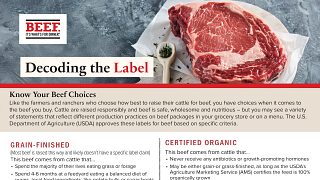
Decoding the Label: Know Your Beef Choices
Like the farmers and ranchers who choose how best to raise their cattle for beef, you have choices when it comes to the beef you buy. Cattle are raised responsibly and beef is safe, wholesome and nutritious – but you may see a variety of statements that reflect different production practices on beef packages in your grocery store or on a menu. The U.S. Department of Agriculture (USDA) approves these labels for beef based on specific criteria.
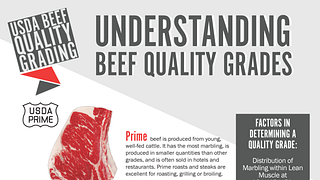
Understanding Beef Quality Grades
Beef grading sets the standards for the various quality levels of beef. The beef grading program uses highly trained specialists and sometimes grading instruments to determine the official quality grade. Beef quality grading is voluntary and administered by the USDA and paid for by beef packers.
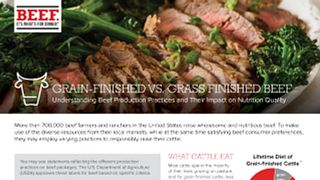
Grain-Finished VS Grass-Finished
More than 700,000 beef farmers and ranchers in the United States raise wholesome and nutritious beef. To make use of the diverse resources from their local markets, while at the same time satisfying beef consumer preferences, they may employ varying practices to responsibly raise their cattle.
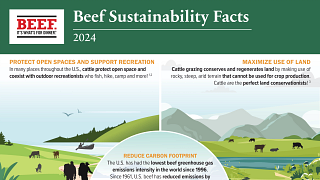
Beef Sustainability Facts
Learn about beef sustainability facts such as protecting open spaces, supporting recreation, maximizing use of land, providing wildfire prevention, protecting plant and animal biodiversity, and reducing the carbon footprint.